Absolutely Literate

Thursday, October 3, 2024

British Columbia Directories on Microfilm, 1860–2001: User's Guide To The Collection

Have you ever wondered if a directory is available on microfilm for a specific time and area of BC? 

The “British Columbia Directories on Microfilm, 1860-2001 : User’s Guide to the Collection” by Norman Amor has been digitized and is now downloadable as a PDF. 

Follow this link: https://dx.doi.org/10.14288/1.0445481

Microfilming of some 1200 titles BC directories has been an ongoing project at UBC Library since 1994. In 2001 they completed filming practically all the provincial and local directories published from 1860 through 2001. 

A large number of the volumes filmed in these projects were borrowed for the purpose from the B.C. Archives in Victoria; in addition to the collection at UBC Library, and from the Vancouver Public Library's Special Collections Division, and the Greater Victoria Public Library.


Monday, February 27, 2023

Considering Audience When You Tell Your Family History

I came across something recently where the person argued that you should not think about your audience when you write your family history because it might change what you write.

I agree and disagree. When you write a first draft you should just let the creative juices flow and write — that draft is for you. Write without revision. Writing that initial draft helps you process the information, shape your theme, and uncover gaps in your research. 

I would argue that it is useful to have some notion of your final product and audience in mind before you start so you have a goal in mind. Thinking about your audience and having a story board for your final product does not change what you write but helps you focus on the end goal.

However, once that first draft is done, then you need to think about your audience and how best to package the family story and deliver it to your audience.

Who your intended audience is does not change the story you tell, but it can change how you deliver that story. 

If your intended audience are people of the same age range as yourself then you likely have a shared history and knowledge. For example, your intended audience will likely understand life before Google and YouTube. However, if your target audience is younger then you will need to provide some historical context. Is the story age appropriate? Does everyone know the language of their ancestors? Will they know what you mean if you write about a party line, a soc-hop, or reference a particular song? Do they only read online? Will they agree with your politics, ethics, message?

Who your target audience is will also determine how your package your family story. Would it be best delivered as a video rather than a book? Should it be delivered as a series of Instagram posts?

Considering your audience should absolutely have an impact on how the family story you tell is revised and delivered.

Is your family story locked in your accumulated documents and trees? Does your family ask for the stories? Then it’s time to pull it all together and publish that story! 

Participants engage in 14 hours of workshops and discussion facilitated by Brenda L Smith and Andrea Lister starting Saturday, April 22, 2023 and ending with a weekend of workshops, and presentations in Wells, British Columbia from Friday, May 19, 2023, 7:00 PM to Sunday, May 21, 2023. Online workshops lead into the May long weekend in-person event (hybrid options available).

Topics include: identifying the audience; choosing the right format; reviewing research, putting words on the page; editing; legal necessities, and assignments to get started. Working with their own materials, and supporting each other, participants discover how to move from gathering information to creating a publishable product. Participants will set goals for their research, organize and evaluate their data, and practice packaging their family story.

Learn more about Unlock Your Family Story: Sharing Your Family's History (Online and In-Person Learning) through Island Mountain Arts.


Tuesday, February 7, 2023

WORKSHOP ANNOUNCEMENT: UNLOCK YOUR FAMILY STORY: Sharing Your Family's History (Online and In-Person Learning

Is your family story locked in your accumulated documents and trees? Does your family ask for the stories? Then it’s time to pull it all together and publish that story! Participants engage in 14 hours of workshops and discussion facilitated by Brenda L Smith and Andrea Lister through Island Mountain Arts in Wells, BC. 

Topics include: identifying the audience; choosing the right format; reviewing research, putting words on the page; editing; legal necessities, and assignments to get started. Working with their own materials, and supporting each other, participants discover how to move from gathering information to creating a publishable product. Participants will set goals for their research, organize and evaluate their data, and practice packaging their family story.

UNLOCK YOUR FAMILY STORY is taught in a collaborative manner in which participants present their writing samples to classmates and share evaluation of each other’s work. The course goal is to promote development of the skills necessary for writing non-fiction from a family history point of view. Course materials support learning by providing background and course content reading, and assignment descriptions. The course is designed for intermediate level research experience, including understanding of cooperative evaluation training and the Genealogical Proof Standard. A large part of each class will consist of sharing and peer evaluation.

Add-on: Monday, May 22, 2023, a one-on-one, 20-minute appointment with the facilitators. In-person only. Get the PDF  to fill out and submit via email here: One-to-one consultation form

Island Mountain Arts offers scholarships and bursaries for our programming

Find details about appropriate scholarships and fill out a request here: http://www.imarts.com/scholarships-bursaries

WHAT ARE THE KEY DATES?

Registration

Monday, February 20th, 2023 | Early Bird Registration Deadline

March 22nd, 2023 | Scholarship Deadline

April 8th, 2023 | Registration Deadline

April 26th, 2023 | Family History Consultation Registration Deadline

REGISTER through Island Mountain Arts

Saturday, June 25, 2022

Local Archives for Prison and Court Records


At the Fireside Chat after my Prison and Court Records talk today for the Ontario Ancestors 2022 conference a gentleman asked about finding prison records for Carleton. I do not have specifics as to the time period in which he was researching nor his ancestor's name.

The first thing to keep in mind is that these records will likely not be digitized, may not be fully accessioned or indexed so searching by your ancestor's name will not yield any results.

My first stop would be the Archives of Ontario. Searching for Carleton + jail yields

  • Ottawa-Carleton Detention Centre inmate case files: 1939-1957, 1972-1991
  • Administrative records of the Ottawa- Carleton Detention Centre: 1860-1991

The second record set seems like a good place to start a search though the Ottawa Jail was a maximum security correctional facility. It includes 61 metres of textual records and 21 reels of microfilm (textual records).

"Series consists of records created and maintained by officials of the Ottawa- Carleton Detention Centre, and its predecessor, the Ottawa Jail, pertaining to the administration of the jail. Records include jail, surgeon's and punishment registers, inmate case files, drug control records, daily count and record books, historical records, and indices."

There are also the County and District Court Judges' Criminal Courts for 1869-1984.

My suggestion would be for the researcher to contact the Archives of Ontario with the specifics in terms of name and date and see if the archives has records to fit his quest. The archivist will let you know if they have records for the place and time period you require or point him to other resources.

Do not forget newspapers — if your ancestor was arrested, it likely made the news.

Sunday, June 19, 2022

The Dairy Herd Improvement Association

Cowichan Jersey cows in Nanaimo, September 1957.  PHOTO BY ROBIN LISTER
Cowichan Jersey cows in Nanaimo, September 1957. Photo by Robin Lister

I was recently sorting through some of my dad’s slides and found a collection of square format slides from 1956 to 1958. Some of them were labelled and dated. My dad, Robin Lister, was the supervisor for the Dairy Herd Improvement Association for Duncan-Cowichan, BC from July 1956 to June 1958. 

Ad for Provincial Dairy Herd Improvement Supervisors
Vancouver Sun, May 26, 1956, 29.

Dairy Herd Improvement Associations (D.H.I.A) had been know until 1953 as Cow Testing Associations (C.T.A.). Several ads for supervisors for the Provincial Dairy Herd Improvement Associations appear in the newspapers. They were looking for “actual dairy farm experience in B.C.” My dad grew up on a Jersey dairy farm and had been involved in 4H so he would have qualified. 

The Department of Agriculture’s Fifty-First Annual Report for 1956 describes the challenge of finding supervisors on page 46 under “Operations”. 

The continuing difficulty in securing sufficient suitable men for this work prevented expansion. Two short courses of instruction for intending D.H.I.A. supervisors were held at the University of British Columbia during the year, results in each case being most disappointing. One tester was secured at the course held in July and two from the course conducted in November.

Robin Lister heads to Cowichan for D.H.I.A. job
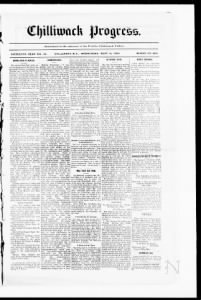
Notes for the community of Cheam in the Chilliwack Progress

Further down the page it reports that “R. Lister to Cowichan to replace D. R. O'Brien (resigned).” My guess is that he was the one tester secured at the course held in July. His address was noted in the appendix as Box 1642, Duncan.

His job included milk testing for milk weight and measuring milk fat. It was not a federal program, it was a semi-provincial program for non-registered, non-purebred cows. The results were announced in the newspaper.

Newspaper article about Holstein setting record
The Province, February 21, 1957, 4.

The January 29, 1958 edition of the Province newspaper stated that Robin Lister, and Harry Standen, along with four others were elected as directors of the Cowichan Agricultural Society. The Standen family are featured in some of the photos in this small collection. The photos also include scenic shots as well of friends and, of course, cattle.

While employed by the D.H.I.A, he lived in a cabin owned by Jack and Mabel Fleetwood who later became mainstays of the Cowichan Historical Society. It seemed fitting to donate the collection to the Cowichan Historical Society. I hope the photos help tell the story of the Cowichan valley.

Jersey
Photo by Robin Lister
Gordon in the snow
Gordon in the snow. Photo by Robin Lister

Thursday, April 7, 2022

Unexpected Benefits of an Online Tree

 By Andrea Lister

Originally published in the January 2022 Maple Ridge Historical Society Family History Newsletter

In the genealogy world we often talk about online trees as "cousin bait"—a way to attract cousins who are willing to share and collaborate. Online trees can have other unexpected benefits. On October 17, 2021 I received the following message through Ancestry:

Hello! I recently purchased a cabinet card photo of Fred Rounsefell. From what I can see I think he is the nephew of your great great grandfather. My hobby is returning these old photos to family members doing research. You seem to be the closest relative who is active on ancestry. He was a confirmed bachelor who died at 40-something in Boston. The photo is incredibly striking. I hate to see it lost to family histories. Let me know if you are interested and I can mail it to you (for free). If I don't hear back within a few weeks I may look for someone else but will try to post a picture of it on Ancestry. Best—Michael

Michael has the Instagram account Lost Photos Found. He buys photos and works to unite lost family photos with folks doing genealogical research.

Of course, I replied with my PO Box information and immediately started researching Fred Rounsefell while I waited for the mail. Frederick Rounsefell was born on August 25, 1875 in Halifax, Nova Scotia, Canada to David Henry Rounsefell and Anna Bell Preston. He was their third child. Frederick, his parents, and his four siblings moved to Boston in 1879.

Frederick was a first cousin to my great-grandmother Margaret DeWolf (Rounsefell) Richardson. 

Fred Rounsefell, 1900 
ANDREA LISTER COLLECTION
PHOTOGRAPHER JAMES EDWARD PURDY
The photograph arrived and it is indeed striking. It captured Frederick in 1900 at age 22. According to the 1900 US census he lived at 24 Forest Rox and was employed as a clerk. The Boston Directory for 1898 shows that Frederick worked for insurance and real estate agency, Carroll & Peers.

The photograph was taken by James E. Purdy, the leading photographer for the Boston-area high schools for much of the 20th century. Purdy died in 1933 (which means the photo is in the public domain).

In 1902 Frederick petitioned to become a citizen of the United States. In 1907 Frederick was initiated into the Washington Lodge of the Freemasons. In 1908 he was noted in the Boston Directory as a Justice of the Peace. 

In September 1918, Frederick filled out a draft registration card. He was forty-three and employed as a bookkeeper at the Exchange Trust Co. bank. The physical description on Frederick's registration noted he was of medium height with a slender build, blue eyes, and brown hair. The First World War ended on November 11, 1918 so it is unlikely that Frederick went overseas.


The Boston Directory of 1932 noted that Frederick was a clerk for the Exchange Trust Company.

In April 1932 the Exchange Trust Company was one of the over 1,400 banks that suspended operations in 1932 and one of over 9,000 banks that failed during the Great Depression in the United States.

25 Apr 1932, Mon Fitchburg Sentinel (Fitchburg, Massachusetts) Newspapers.com

The Exchange Trust Company was taken over by the state in April 1932. The June 4, 1932 issue of the Fitchburg Sentinel noted that the assets of the Exchange Trust had been placed in the hands of a liquidator.

Frederick Rounsefell died July 1, 1932 at age fifty-six. His cause of death still to be researched.

I am grateful to Michael for his generosity in purchasing and returning the photo to me. His gift spurred me to research a member of my tree whom I had neglected. 

Everybody has a story.


Thursday, January 28, 2021

Writing Prompts for Family History


We had a request for more writing prompts in last night's "Unlock Your Family Story: writing & publishing your family’s history" class with
Surrey Libraries.

Here are a few:


  1. Migration: My great grandmother Ada Louisa Davis packed her bags to come to Canada, she was…
  2. Work Experience: On his tenth birthday William Jenks’ father Thomas signed his indenture to tiler and bricklayer John Dawson. William…
  3. Witness to an Event: When the Dawson Creek train station exploded in February 1943, William Kehler was eating in the café across the street. The cause…
  4. Naming traditions: Edgeworth is a recurring name in the family tree, where did the name originate and what are the stories of all of its namesakes?
  5. Family artifact: How did your ancestor acquire it? Where was it made? Who has it been passed down through? What does it tell you about the family? Has it been repaired or adapted
  6. Tell the story of a Photo: Identify the people in the photo, as well as the date and time period. Write a caption for the photo as though you would be using it in a book.
  7. Family Recipe: Is there a recipe in your family that has been passed down for generations?
  8. Family pet: Was there a family pet who appears in all the photos?
For the Maple Ridge Family History Group's February 3rd Meeting Short Program we are sharing stories of secret romances.
February is the month of romance– celebrating relationships. How can we link this to our family history? I think we have an intriguing approach. Have you discovered a secret romance in your ancestry? What are the details?
Depending on the times, there could be many reasons why a couple kept their relationship secret. Perhaps they were not socially equal, belonged to different religions or knew their families would object to their choice. Have another look at your ancestors’ relationships. Maybe you’ve missed a romance – a secret one!

Read about Henry Cecil, 1st Marquess of Exeter and Sarah Hoggins in the January edition of our newsletter. Join us to hear our stories and share your story.

Tuesday, September 8, 2020

Fall Launches

Several projects launched in September.

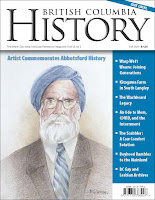
The Fall 2020 issue of British Columbia History magazine is out. It includes cover art and interview by Abbotsford Artist Manjit Singh Sandhu; “The Kitagawa Family: A farming legacy in south Langley” reflections by Akiko Oshiro and Sumiye Iwasa; “Warp Weft Weave: Joining generations” by Jenn Ashton; “The Washboard Legacy” by Emma Quan; “An Ode to Mom, COVID, and the Internment” by Laura Saimoto; “My Discovery of the Mainland: Boyhood Rambles” by Barry Gough; and “The Scabbler: A solution to a serious cow comfort problem” by Mike Yusko.

It is interesting to read “Stories of Objects: The Iron Lung” and think about similarities with the current COVID situation.


Over the years at British Columbia History, I have had the pleasure of getting acquainted with numerous authors. Chatting with Jenn Ashton has led to a collaboration, Study Guide: Balancing History: Warp Weft Weave: Joining Generations. This study guide has been prepared to accompany the British Columbia History magazine article “Warp Weft Weave: Joining Generations” (Vol 53, Issue 3, Fall 2020) by award-winning author and visual artist Jenn Ashton. The focus of the study guide, aimed at grades 8 through 12, is intended to encourage students to dig deeper into history to find a voice that was quieted or unheard. The guide will deepen understanding and knowledge of colonial histories and the current realities of Indigenous People, as well as, an understanding of social injustices and discriminatory policies in Canada (including Residential Schools, the head tax, the legal system, disenfranchisement, and internments).

In the works for the past year was a project to update the publication guidelines for the British Columbia Historical Federation to match the practice and to make them more user friendly for authors. Get Published: BCHF Submission Guidelines for Authors is intended to support authors as they write about the evolving understanding of the history of British Columbia, Canada, and our world. The guidelines include checklists intended to make the publication process easier for authors by ensuring they have everything in place prior to submitting an article. If you are a history author, you will find the guidelines a useful resource, whether you intend to write for the British Columbia Historical Federation or not.

For the past several years I have been working with M. Anne Wyness as a researcher, editor, coach, and image harvester for her book, The Larder of the Wise: The Story of Vancouver's James Inglis Reid Ltd. by M. Anne Wyness. 

The Larder of the Wise: The Story of Vancouver’s James Inglis Reid Ltd. is the human story of the iconic store whose traditional Scottish fare and well-remembered hallmarks of “We hae meat that ye can eat” and “Value always” earned the following of devoted customers from inside and outside of the city for almost eighty years.

If you attended a Robbie Burns event before 1986, it is likely that the haggis came from James Inglis Reid's shop.

The book is available through your local book stores. Check out a review of the book on Vancouver is Awesome.


On a more personal front, I have completed the Editing Certificate through Simon Fraser University Continuing Studies. I am just waiting for the certificate to hang on my wall.

There are some other projects on the horizon for the fall and a whole new chapter!


Monday, July 22, 2019

Using Inflation Calculators to tell your Family Story

Have you ever used an inflation calculator when researching your family history? Inflation calculators use historic consumer price index data to show changes in the cost of a fixed "basket" of consumer purchases. These include food, shelter, furniture, clothing, transportation, and recreation.

I highly recommend using inflation calculators as it can change the narrative of the story.

Recently, I watched one of those wonderful genealogy shows. The ancestor in question had "arrived in the United States in 1910 with $100 in his pocket". It made for a romantic story of triumph over a poor start, but it was it true? One hundred dollars in 1910 is equal to $2721.54 in 2018 according to one inflation calculator. Almost $3,000 in his pocket is not a fortune but it is likely enough to rent a place to live and eat until he found work. The inflation calculator goes on to indicate that "if you were to buy exactly the same products in 2018 and 1910, they would cost you $100 and $3.61 respectively."

You would need to do more research into the cost of food and housing to really get a good picture.

At a recent talk I gave on "Prison and Court Records" there was a discussion of an ancestor who was hung in the 1860s in England for stealing £20. If you use the Bank of England Inflation Calculator £20 is equal to about £2,388.82. Then, using a foreign exchange calculator, converting to CDN dollars, about $4,000. Suddenly the theft story changes from being petty theft to something more serious.

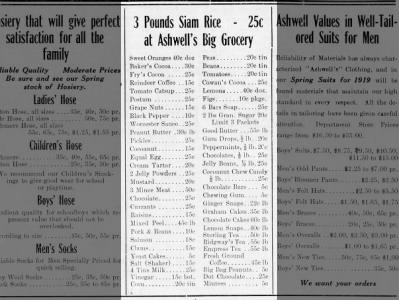
Thu, Feb 13, 1919 – Page 2 · The Chilliwack Progress (Chilliwack, British Columbia, Canada) · Newspapers.com You can use inflation calculators to convert the cost of everyday items. "Tomato Catsup" (size unknown) sold at Ashwell's Grocery for 25¢ in 1919.

Using the Bank of Canada Inflation Calculator that works out to $3.51 in 2019 money.

Looking through my flyers, I can purchase a 375 ml bottle of Heinz Tomato Ketchup for $3.99. So, the price in essentially the same.

Obviously, to get a full picture you need to do some number crunching on wages and housing and so forth. However, it is a good reminder to do some quick calculations before we start romanticising the past and wishing that a hamburger cost only 15¢ today.


Tuesday, January 22, 2019

Copyright and the Family Historian

I frequently read items that imply that copyright is a new concept. In fact, copyright dates back to 1710 and The Statute of Anne, also known as the Copyright Act 1710. However, it was not until 1842, and Copyright Act 1842 that copyright could belong to an author, rather than a publisher.

As family historians we are directly affected by copyright. As researchers we want access to records. Often, we are self-publishers and educators.

In 2018 the Federal government started a review of Canada’s copyright laws with the aim for completion in early 2019. Members of the Family History Group submitted a brief on December 12, 2018 to the Standing Committee on Industry, Science and Technology and our Member of Parliament, Dan Ruimy for the Statutory Review of the Copyright Act to promote awareness in the Committee regarding the needs and concerns of family historians about the copyright constraints that govern our work in telling Canada’s story.

This submission addresses the confusion that surrounds the use of previously published materials and unpublished original and copied documents and images, with particular concern for the changes proposed by the US Mexico Canada Agreement.

We support Canadian creators, publishers, libraries and archival institutions but also understand that copyright should strike a balance between protecting a creator’s income while, at the same time, allowing for the freedom for new works to be created using previously created materials.

We feel strongly that copyright law should be accessible and easily understood by the general public and not require legal advice to ensure compliance.

I encourage you to educate yourself about copyright get involved in the discussion.

Judy G. Russell and the Legal Genealogist is a good blog to follow but Canadians need to keep in mind that is from an American perspective and our copyright laws are different in Canada.


Tuesday, August 21, 2018

Travelling Back in Time

I was recently fortunate enough to travel to Ireland and see the land where on which my ancestors were born.

Before we travelled to Ireland, I made contact with people at Ireland Reaching Out. Ireland Reaching Out (Ireland XO) is a volunteer-based, non-profit initiative which endeavours to help people reconnect with the parish of origin.

I inquired about family records and received an immediate response from Roger McDonnell. I also asked if it was possible to see what remained of the family estate for the Ussher family in Killallaghtan, Galway. I received an immediate response in the affirmative and a contact name for when we arrived.

Liam Irwin met with us and spent hours showing us the estate, and checking with the local families to make sure it was okay to wander through their property.

My branch of Usshers settled in what was to become Canada in the early 1800s but it was fascinating to see my roots in Loughrea.

Thank you to Liam Irwin and Ireland Reaching Out.


Tuesday, May 3, 2016

Cross-checking Newspapers

As family historians we know that newspapers are a wonderful resource for researching our ancestors. However, it is important to remember to look in more than one newspaper to gather pieces of the story.

My Grossman branch of the family lived in Chilliwack, BC. The September 5, 1906 edition of the Chilliwack Progress states:

Mrs. Carl Grossman left on Sunday morning’s [September 2] train to meet Mr. Grossman in Vancouver. They will spend about ten days visiting Vancouver, Victoria and Bowen Island. Dorothy and Babbie Grossman accompanied their mother.
Chilliwack Progress, September 5, 1906

In the early part of the 20th century it was common for newspapers to list hotel arrivals  — think of the privacy issues that would cause now! A search discovers “C. Grossman, wife and family, Chilliwack” as a hotel arrival at the Dominion Hotel in Victoria in the September 3 edition of the Daily Colonis.

The Vancouver Daily World of September 12, 1906 records “Mr. and Mrs. Carl Grossman and daughters, of Chilliwack, are visiting in Vancouver” in the “People Passing” column.

None of this information is ground-breaking but it tells me that they had the money to travel and stay at the Dominion Hotel. Six-years-old Dorothy and three-years-old Babbie (Eileen) travelled with them, but two-year-old George and four-month-old baby Grace must have stayed at home. Perhaps they stayed with Mrs. Grossman’s sister and family. What makes this trip even more curious is that it happened just a few months after Carl Grossman’s grocery store was destroyed in a fire and according to the newspaper Carl was busily getting his new store ready.

Broaden your searching beyond the place where your ancestors lived and you might also find out where they travelled, where they stayed, and who they visited.

Wednesday, November 18, 2015

Giving Your Word Docs Style

I was a co-presenter last night for Technology Skills for Writers at the Golden Ears Writers. I presented Microsoft Word for Writers and was reminded again at how well Microsoft has hidden some of its most useful features.

One of the most essential features of Word is Styles. It has been there since the beginning of Word, I used with with Word 95 but until they introduced the Ribbon toolbar it has been a hidden gem.

What the hay is a style?


A style is a group of formatting characteristics such as font, colour, and spacing that you apply to the text in your document at one time.

What does that mean? It means that if you use styles you can change the look of your document with just a few clicks. This saves you a lot of time when you are working on large documents and ensures a consistent and professional look to your whole document.

Learn styles and you will no longer waste hours manually going through your document and selecting text and trying to remember if you used 12pt Arial or 11pt Verdana on the last page. It means that with some time invested up front you can indent paragraphs, add space between paragraphs, double-space, add text and numbering to your headings (Chapter 1), and more with the click your mouse.

You can use and edit styles from the Ribbon.


On the Home tab, in the Styles group, right-click on the style and select Modify.

Or you can do it old-school (this is my preference).

On the Home tab, in the Styles group, click the Styles Dialog Box Launcher or use the shortcut keys (Alt+Ctrl+Shift+S).

The Style Pane will open.

Select a style and click on the drop-down button, select Modify.

Create Your Own Styles

If you like the dialogue in your book to be indented on both the right and left and in italics, create a style for dialogue.

From the bottom of Style Pane click on the New Style button.


Learn more about styles on the Microsoft site.

Friday, November 6, 2015

100 Years Ago

The Daily Colonist, May 28, 1916, page 19
100 Years ago on November 6, 1915 my grandfather, Tom Lister, enlisted in Victoria, British Columbia. He joined the Victoria Fusiliers 88th Battalion. He had been living in Duncan and working as a farmer. He had immigrated from Skipton, England in 1910.
Tom Lister, 1915. Courtesy Gerry (G.W.) Lister

The Daily Colonist from May 28, 1916 declared that "the Victoria Fusiliers hold the record for the number of Cowichan recruits."

The same issue has a wonderful image of the crowds in Victoria bidding farewell to the troops on board the C.P.R. S.S. Princess Charlotte.

Lieutenant Colonel Harold Joseph Rous Cullin, commanding officer of the 88th Battalion, wrote a letter to the Daily Colonist outlining their trip across Canada by train from Vancouver to Halifax. The bright and cheerful tone of the letter is punctuated with snippets of their training and welcoming receptions at the various stops. Marches in Medicine Hat, Alberta. Push-ups and knee bends in Schrieber, Ontario. Cigarettes and oranges in Kenora, Ontario. In Ottawa, Ontario they participate in a parade and a march to Parliament Hill where they are inspected by the Duke of Connaught and meet various colonels, generals, and government ministers. They saw the scaffolding on the Parliament Buildings; a fire destroyed the original Centre Block in February of 1916. Then they mark back to train to head to Montreal.

"Arrived in Halifax on Wednesday, May 29, at 11 a.m. Ten troop trains ahead of the 88th, two behind. Nearly 7,000 troops aboard. Heavy rain. Authorities very strict and guards everywhere. Lots of warships and destroyers in harbor. Men all intact. Wonderful behavior. No sickness in 88th. No deserters. No defaulters. Spirits simply wonderful. Message from Victoria Fusiliers to Victoria: ' Keep on recruiting. The war is only just starting. It will go another two years. Fill up the 88th again.'"

On May 31, 1916 they sailed from Halifax and headed to England.

Sources

"The Fire of 1916." Public Works and Government Services Canada. http://www.tpsgc-pwgsc.gc.ca/collineduparlement-parliamenthill/batir-building/hist/1916-eng.html

"Soldiers of the First World War (1914-1918)." Record Group 150, Accession 1992-93/166, Box 4930 - 35. Library and Archives Canada, Ottawa.

“Vancouver Island.” Daily Colonist, May 28, 1916, 17.
“Remarkable Illustration of Victoria's Hearty Tribute to Fusiliers.” Daily Colonist, May 28, 1916, 19.
Cullin, Lieut-Col. “Had Fine Journey Across Continent.” Daily Colonist, June 29, 1916, 5.


Tuesday, August 4, 2015

Butter-Fat


The internet is opening up the world of research and just recently the BC Dairy Historical Society  digitized and made available for viewing online the 674 editions of the Butter-Fat magazine published by the Fraser Valley Milk Producers' Association from 1923 to 1993. The Butter-Fat editions contain a detailed history of dairy and agriculture in BC including several historical editions with wonderful historic photographs. The editions are in PDF format and can be downloaded to your PC, iBooks or Kindle for reading and searching.

My family was very involved in the dairy industry as Jersey farmers, with 4H, and later working for the goverment in the agriculture department so I did search was rewarded with several results.

The 1924 February edition shows me that my grandfather had some very interesting names for his cows, Rosewood Model Kitty, Dorothy's Dimple Dot, Valentine's Bonny Maid, and Dora's Golden Lass. My dad has explained the naming convention is that first name is the name of the farm, the lineage, the name. In their case they didn't have a farm name so I can see that he named some of them for my grandma Dorothy.

Apparently Fauvic Baroness St. Mawes made the Jersey records in 1928 for milk production.

Look at this gem from the July 1927 edition. It includes this great group shot from a F.V.M.P.A. field day and picnic in Chilliwack.

I have much more to explore and I am looking foward to the journey.

Saturday, June 27, 2015

Absolutely Literate at Fort Langley's Festival of the Book, July 1

I am looking forward to being part of the Celebrate Canada Day in Fort Langley July 1st party in Fort Langley.
Join me at the Fort Langley Festival of the Book between 11:00 and 2:30. The Festival is followed by the Bard in the Valley’s production of William Shakespeare’s Love’s Labours Lost at 3:00.
I will be at the Fort Langley Community Hall along with other local writers. I will have copies of the newly redesigned British Columbia History magazine and Looking Back: Volume One, a collection of stories written by Sheila Nickols.
See you there.

Friday, May 29, 2015

Friday Tech Tip: How to get Microsoft Word to read to you

At my talk last night "Editors as Partners, not enemies" for Art of the Book I mentioned that you can get Microsoft Word to read out loud to you.

Here's how to add the Speak command to your Quick Access Toolbar and use the tool:
  1. Open Microsoft Word.
  2. From the top of your screen next to the Save, Undo, and Redo buttons, click Customize Quick Access Toolbar arrow.
The Word Options dialog box opens.
  1. From the Choose commands from drop-down, select All Commands.

  1. Scroll down to the Speak command, select it, and then click Add.

  1. Click OK.
The Speak icon appears on your Quick Access Tool.

To use the Speak command

  1. Select the text you want to hear or select your entire document Ctrl+A.
  2. Click the Speak command.

Word will read to you. Admittedly, it reads to you in one of those computer voices and you might feel like you are on the Skytrain or have just been read to by Marvin the Paranoid Android.

Adjusting Voice Settings

If your computer’s sounds too computer generated or if it speaks too quickly you can easily adjust the settings.
  1. From the lower left-hand corner, pressing the Start button.
  2. In the search box, type narrator.
  3. Click on Narrator.
  1. Click Voice Settings.
  2. Edit the speed, volume, and pitch.
  3. Click OK when you are done.
  4. Click Exit.


Monday, April 13, 2015

Art of the Book with Brian Murdoch

Have you ever thought about books having a story to tell beyond the words on the page? Why was the book written? Who owned it? Did the owner write something of significance in the margin?

Brian Murdoch brought up these ideas and more on April 9 during his talk “The Importance of Books Beyond the Text: Books as Historical Artifacts.”

Brian made me think about why I love book stores and what we have lost with the demise of so many independent stores and the shift to online. I love the smell of ink, the feel of the paper, the promise of the spine of a book, and the potential of the covers. I enjoy displays in bookstores of books that have been banned through time or the favourite books of one of the employees. I enjoy it when you tell an employee that you like an author and they say “well if you like her, then you might like….”

In 2012 I attended Vancouver O'Reilly's Mini TOC (Tools of Change for Publishing). I wrote about how I heard a lot of discussion about discoverability, curated content, and interactive books. Although it is now 2015 I do not think that the challenge of discoverability for online book stores has been solved.  A number of social cataloguing websites exist where users can add books to their personal bookshelves, rate and review books, and see what their friends are reading. There are algorithms on these sites and the online shopping sites that suggest books based on your reading and shopping habits. However, there is no algorithm that can replace a passionate book store employee or antiquarian book dealer who loves books and creates “for his customers the joy of discovering a book they didn't know existed.”

Book selling and reviewing is now too often about the best-sellers. At chain stores we are often pointed by a disinterested employee in the direction of the genre rather than guided to an author waiting to be discovered.

Brian also talked about the art of books. The beauty of illustrations created by hand on metal plates and printed separately from the text; a world away from our digital creations. He talked about leather covers gilt edged by hand. He talked about how to tell a first edition and cautioned us about online purchasing. He asked why books are not valued as art on the same level as paintings.

This post just glosses over the depth and range of topics that Brian covered. I look forward to the second talk in the series on book design with Bill Glasgow of William Glasgow Design.

For more information or to register, follow the link:

Friday, March 27, 2015

Help send W.T. Waterston's Medals Home

Photo courtesy Gerry Lister

Photo courtesy Gerry Lister
Friday mystery. My cousin has a World War I war medal that was in our family collection. The medal was issued to a W.T. (William Thomas) Waterston, regimental number 429616. We do not know of any family connection to our own family. The possible connections are that W.T. could either have served with Thomas Lister or known Carl Grossman through the Westminster Regiment.


His Attestation Paper is available at Library and Archives Canada but his service file has not been digitized yet.

According to this record he was born in Woodstock, Ontario June 17, 1882.

He is living with his parents and siblings in Vancouver in the 1901 Census. Father: Thomas Waterston, age 46, occupation mining; mother, Francis E., age 40; sister, Mattie, age 21; sister Katie, age 17, and brother Albert, age 11. (Year: 1901; Census Place: Vancouver (City/Cité), Burrard, British Columbia; Page: 14; Family No: 150)
Photo courtesy Gerry Lister


There is a marriage record for a William Thomas Waterston, age 30. Residence, Milner, BC. He married Ruby Miller Florence April 15, 1912. Says he was born in the United States. Parents: Thomas W. Waterston and Frances E. Bristol.


I am not sure what happened to wife #1 as his lists himself as no married on his Attestation.

He enlisted March 13, 1915 at New Westminster, British Columbia. Civilian Occupation: Farmer    

Next of Kin: Mrs. McKane, sister, of 6052 Hornby Street, Vancouver, British Columbia

Invalided to Canada for further medical treatment in Aug 1917 on the Letitia.

Married Eliza Jane Biggins at Vancouver December 9, 1918. Residence, Huntington, BC. He lists his place of birth as Morris, Minn, USA. Father, Thomas William Waterston, Lawyer and Frances Elizabeth Bristol.

I can find him in the directories living in Huntington in 1919.


He and Eliza lost their son, Harold Malcolm Waterston, born 12 Jul 1921 and died Jan 9, 1923.

Died at Sumas, British Columbia December 20, 1940 and is buried in Hazelwood Cemetery in Abbotsford, BC. His registration of death lists his birth as Woodstock Ontario, June 17, 1881. His father having been born in Scotland and his mother in the USA.

Thursday, February 26, 2015

How is Your Story Built? Editing for Structure

I started a series of posts a while ago about the different types of editing. Today I am going to write about editing for structure.

How is your document organized? Keep your fingers off your keyboard and read it as a reader. A large part of my work is editing non-fiction articles, but the same questions can be applied to memoirs, family history, fiction, and even business writing.
  1. Does the introduction prepare the reader for what follows?
  2. Does the introduction captivate?
  3. Are there confusing transitions?
  4. Does the timeline flow logically or does the piece move back and forth in time?
  5. Is there extraneous information that distracts the reader from the main point? Do all of the parts relate to the whole?
  6. Does the piece have a solid through-line that takes the reader from introduction to conclusion? 
Once you have answered these questions, you can start to revise.

Our goal is to create the best experience we can for the reader. We do not want to lose them along the way.

Sources:
Advanced Study in Writing for Business and the Professions by Anne Hungerford (course material)
"Writing from the Top Down: Pros and Cons of the Inverted Pyramid", Poytner. by Chip Scanlan

Related Posts:
Revising, revising, revising
Truth and Accuracy
Editing for Audience and Purpose

My Blog List