It is interesting to read “Stories of Objects: The Iron Lung” and think about similarities with the current COVID situation.

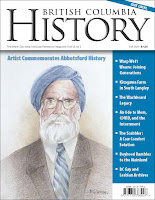
Over the years at British Columbia History, I have had the pleasure of getting acquainted with numerous authors. Chatting with Jenn Ashton has led to a collaboration, Study Guide: Balancing History: Warp Weft Weave: Joining Generations. This study guide has been prepared to accompany the British Columbia History magazine article “Warp Weft Weave: Joining Generations” (Vol 53, Issue 3, Fall 2020) by award-winning author and visual artist Jenn Ashton. The focus of the study guide, aimed at grades 8 through 12, is intended to encourage students to dig deeper into history to find a voice that was quieted or unheard. The guide will deepen understanding and knowledge of colonial histories and the current realities of Indigenous People, as well as, an understanding of social injustices and discriminatory policies in Canada (including Residential Schools, the head tax, the legal system, disenfranchisement, and internments).
 In the works for the past year was a project to update the publication guidelines for the British Columbia Historical Federation to match the practice and to make them more user friendly for authors. Get Published: BCHF Submission Guidelines for Authors is intended to support authors as they write about the evolving understanding of the history of British Columbia, Canada, and our world. The guidelines include checklists intended to make the publication process easier for authors by ensuring they have everything in place prior to submitting an article. If you are a history author, you will find the guidelines a useful resource, whether you intend to write for the British Columbia Historical Federation or not.
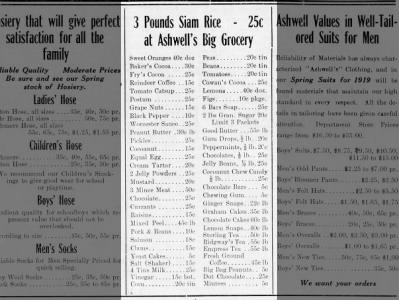
 For the past several years I have been working with M. Anne Wyness as a researcher, editor, coach, and image harvester for her book, The Larder of the Wise: The Story of Vancouver's James Inglis Reid Ltd. by M. Anne Wyness.
Over the years at British Columbia History, I have had the pleasure of getting acquainted with numerous authors. Chatting with Jenn Ashton has led to a collaboration, Study Guide: Balancing History: Warp Weft Weave: Joining Generations. This study guide has been prepared to accompany the British Columbia History magazine article “Warp Weft Weave: Joining Generations” (Vol 53, Issue 3, Fall 2020) by award-winning author and visual artist Jenn Ashton. The focus of the study guide, aimed at grades 8 through 12, is intended to encourage students to dig deeper into history to find a voice that was quieted or unheard. The guide will deepen understanding and knowledge of colonial histories and the current realities of Indigenous People, as well as, an understanding of social injustices and discriminatory policies in Canada (including Residential Schools, the head tax, the legal system, disenfranchisement, and internments).

The Larder of the Wise: The Story of Vancouver’s James Inglis Reid Ltd. is the human story of the iconic store whose traditional Scottish fare and well-remembered hallmarks of “We hae meat that ye can eat” and “Value always” earned the following of devoted customers from inside and outside of the city for almost eighty years.
If you attended a Robbie Burns event before 1986, it is likely that the haggis came from James Inglis Reid's shop.
The book is available through your local book stores. Check out a review of the book on Vancouver is Awesome.
On a more personal front, I have completed the Editing Certificate through Simon Fraser University Continuing Studies. I am just waiting for the certificate to hang on my wall.
There are some other projects on the horizon for the fall and a whole new chapter!